Marine electronics · 12 min read · Updated 2026-08-04
CHIRP transducers and Airmar, explained for Australian hulls
The screen is not the sounder. Frequency, tilt, mounting and the Airmar family decide whether you see bait under a Gold Coast bar or a smear.
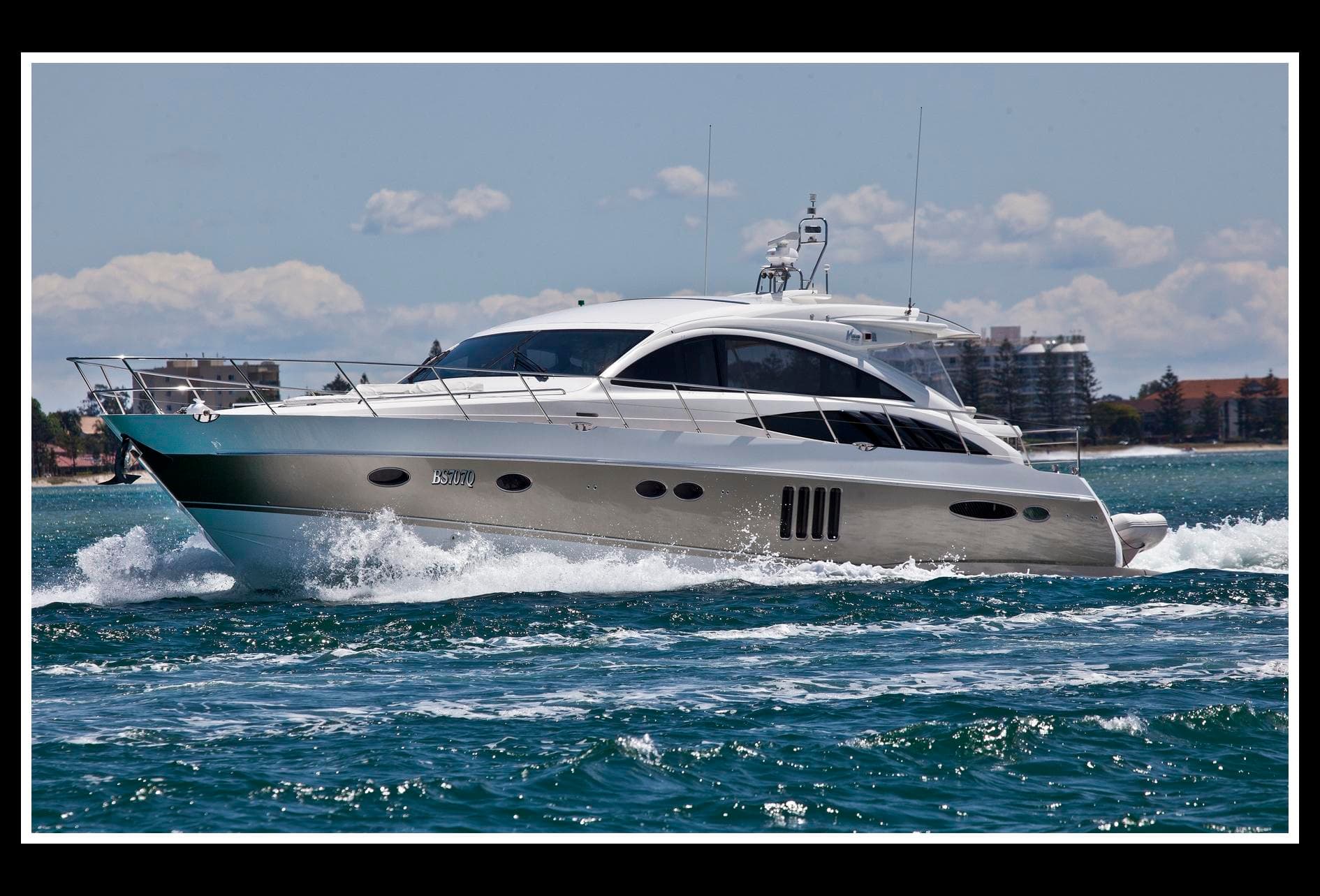
Photo: Pleasure Boat on Southport Broadwater by Sheba Also. Licensed under CC BY-SA 2.0. Source on Wikimedia Commons. Also listed on the AM Wholesale image credits page.
CHIRP is a swept-frequency ping. Instead of shouting one note (50 kHz or 200 kHz) the transducer sweeps a band. The sounder then compresses that echo into a sharper picture of bait, thermocline and bottom. Marketing turned that into a sticker. Physics did not change: the transducer still has to sit in clean water, at the right angle, on a hull that does not aerate the face.
The archived Australian Marine Wholesale site made a point of Airmar-certified installation and a three-year transducer warranty. That is the correct emphasis. A $4,000 MFD on a $180 transom puck in dirty water is a $180 sounder.
Frequency bands in plain language
- High CHIRP (around 150–240 kHz): crisp shallow detail, bait, and the water most Australian trailer boats actually fish.
- Medium CHIRP: a compromise for mixed inshore work.
- Low CHIRP (around 40–75 kHz): deeper water, wider cone, less pretty, more honest when you are off the shelf.
Combo transducers that claim every band in one housing are convenient. They are not magic. A dedicated Airmar through-hull, matched to the MFD’s sonar module, still wins on a 40-foot cruiser.
Mounting is the product
Transom mounts are right for most trailer boats if the face is wet at speed. Queensland steps and Australia’s habit of stacking a second transducer beside the first are how you get interference.
In-hull (shoot-through) works on solid fibreglass and fails on cored or air-filled bottoms. Test with a bag of water before anyone commits resin.
Through-hull is the cruising answer. Tilted-element Airmar housings exist because a 12-degree deadrise does not point at the bottom. Ignore tilt and you will own a sounder that goes deaf on one tack.
Bronze, plastic or stainless is a hull and electrolysis conversation, not a catalogue colour. Pair it with the electronics package planner so the sonar module and the transducer are from a supported family.
Side, down and “3D”
Side-imaging and down-imaging are high-frequency pictures, excellent for wrecks and pontoon edges, poor as your only depth instrument. Keep a conventional CHIRP depth as the number you trust when the bar goes shallow.
If the display cannot drive the transducer you want, you chose the wrong family. That is a brand comparison problem, not a “buy a better SD card” problem.
Commissioning
Set the keel offset from a tape, not a guess. Set the temperature offset if you actually use it. Then run at the speed you fish, not at the dock. A transducer that paints beautifully at 4 knots and whites-out at 18 is unfinished.
For the rest of the helm, return to chartplotter versus fishfinder versus MFD and the NMEA 2000 refit guide.
Frequently asked questions
- Is a transom transducer good enough for a 7-metre trailer boat?
- Yes, if it sits in clean water at the speed you actually fish and is not behind a strake, a transducer already there, or the outboard’s turbulence. Many Australian trailer boats never need a through-hull.
- What does Airmar certification actually change?
- It changes who is allowed to drill your hull without voiding the obvious parts of a warranty conversation. The old AM Wholesale desk advertised Airmar-certified installation for a reason: a leaking or noisy through-hull is not a software update.
- Do I need side-imaging in Moreton Bay?
- Only if you hunt structure. For bar crossings and general cruising, a quality down-facing CHIRP with a truthful depth is worth more than a side-scan demo.