Watermakers · 11 min read · Updated 2026-09-07
Watermaker maintenance in tropical Queensland
Heat, bloom and estuary silt are harder on membranes than ocean miles. Flush, pickle and pre-filters are the whole job.
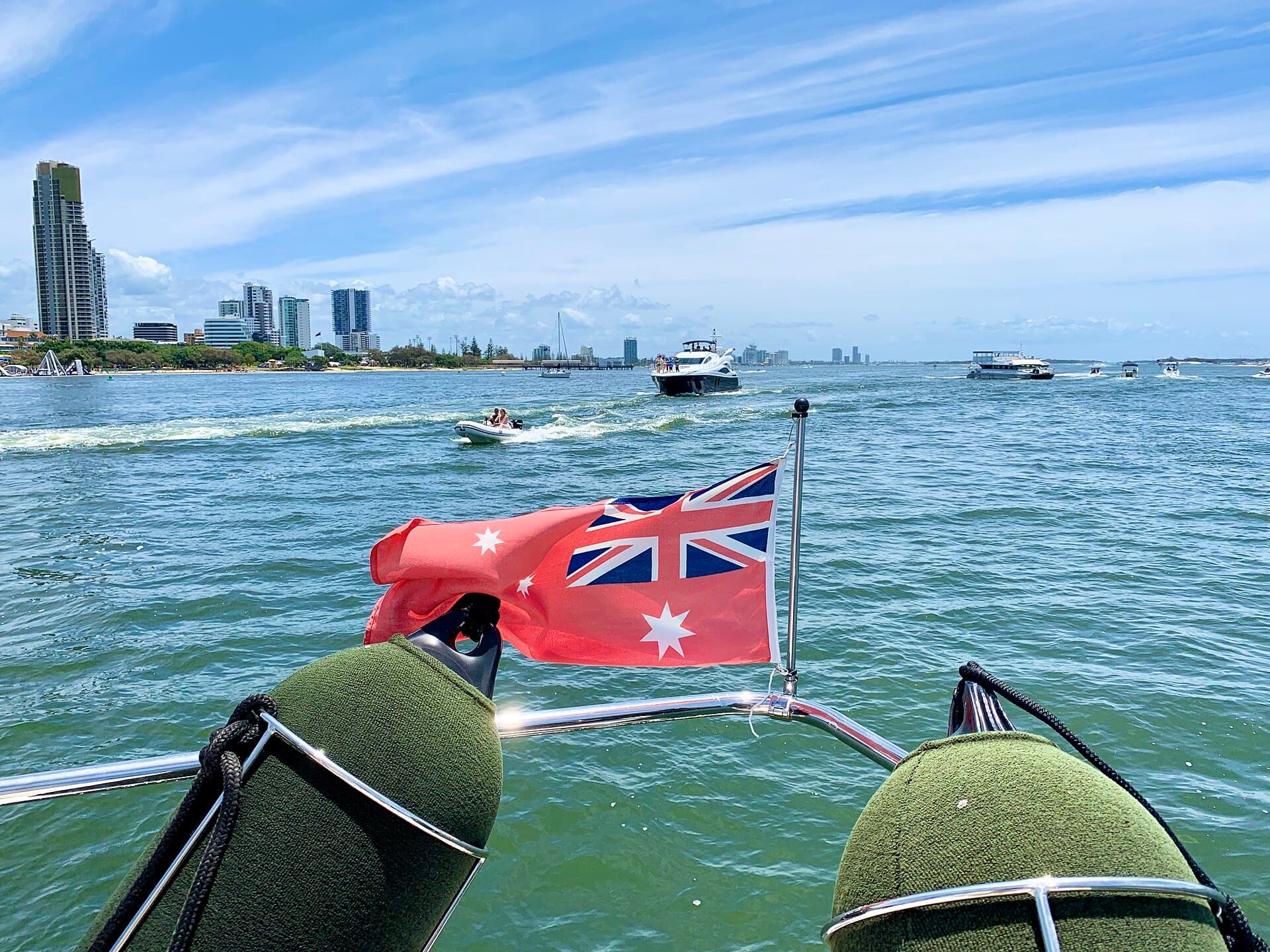
Photo: Cruising across The Broadwater, Queensland, 2020 by Kgbo. Licensed under CC BY-SA 4.0. Source on Wikimedia Commons. Also listed on the AM Wholesale image credits page.
Queensland is a membrane climate. Warm water grows things. Rain on the Gold Coast hinterland turns the Broadwater and the Coomera the colour of tea. A watermaker that was happy in a brochure’s 15-degree test tank will sulk here unless you treat pre-filters, flush and pickling as part of leaving the berth.
The old Blue Water kit list always included a bronze sea strainer, carbon on the product side and a fresh-water flush. Those are not accessories. They are the maintenance plan.
Pre-filters are consumables
Carry them like fuel filters. When the gauge (or the controller) shows a rise in differential pressure, change them. After rain, change them sooner. Running a high-pressure pump against a blocked pre-filter is how you own a pump.
A fine strainer at the intake is the first filter. Clean it. A watermaker that sucks silt will teach you about membranes.
Fresh-water flush
Whenever the unit stops, flush the membranes with product or tank water as the manufacturer specifies. Automatic flush is worth the money in the tropics because owners forget. Manual flush is fine if it is a habit, like the EPIRB test.
Do not flush with marina water that you would not drink.
Pickling and storage
If the boat will sit — a work month, a cyclone season haul-out — pickle the membranes with the approved biocide or storage solution. Dry membranes that sat warm and dirty are landfill. This is the single expensive omission in Australian ownership.
Where you run it
Open coastal water. Not the river after a northerly. Not a crowded marina. Not a bloom you can smell. Production numbers in choosing a watermaker assume something like seawater. The Broadwater after a week of rain is not that.
Annual habits
- Check high-pressure fittings for weeps.
- Confirm the product salinity alarm still alarms.
- Service the pump as its oil or lubricant schedule says.
- Log hours, the way you log engine hours.
If the family on the frame is one of the two the Coomera desk imported, keep the Blue Water versus Pacific Light piece next to the manual. The controller menus differ. The bacteria do not.
Frequently asked questions
- How often should I change pre-filters in the Broadwater?
- When the pressure drop says so, which in a bloom or after rain may be hours, not weeks. Carry more filters than the brochure suggests. Estuary water is not the water the factory tested in.
- Do I need to pickle for a two-week work trip?
- If the unit will sit without a fresh-water flush cycle, yes. Automatic flush systems help. They do not invent biocide. Follow the manufacturer’s idle period.
- Can I run the watermaker at the Coomera marina?
- You can try, and you will spend the week on pre-filters. Produce water offshore or in clean coastal water. Marinas are oil, silt and antifoul.