Marine electronics · 12 min read · Updated 2026-07-30
How to spec a marine electronics package for a 30- to 50-foot Australian cruiser
The useful order is power, network, position, heading, then glass. Screens last. Backbones and batteries decide whether the refit works on a night run north.
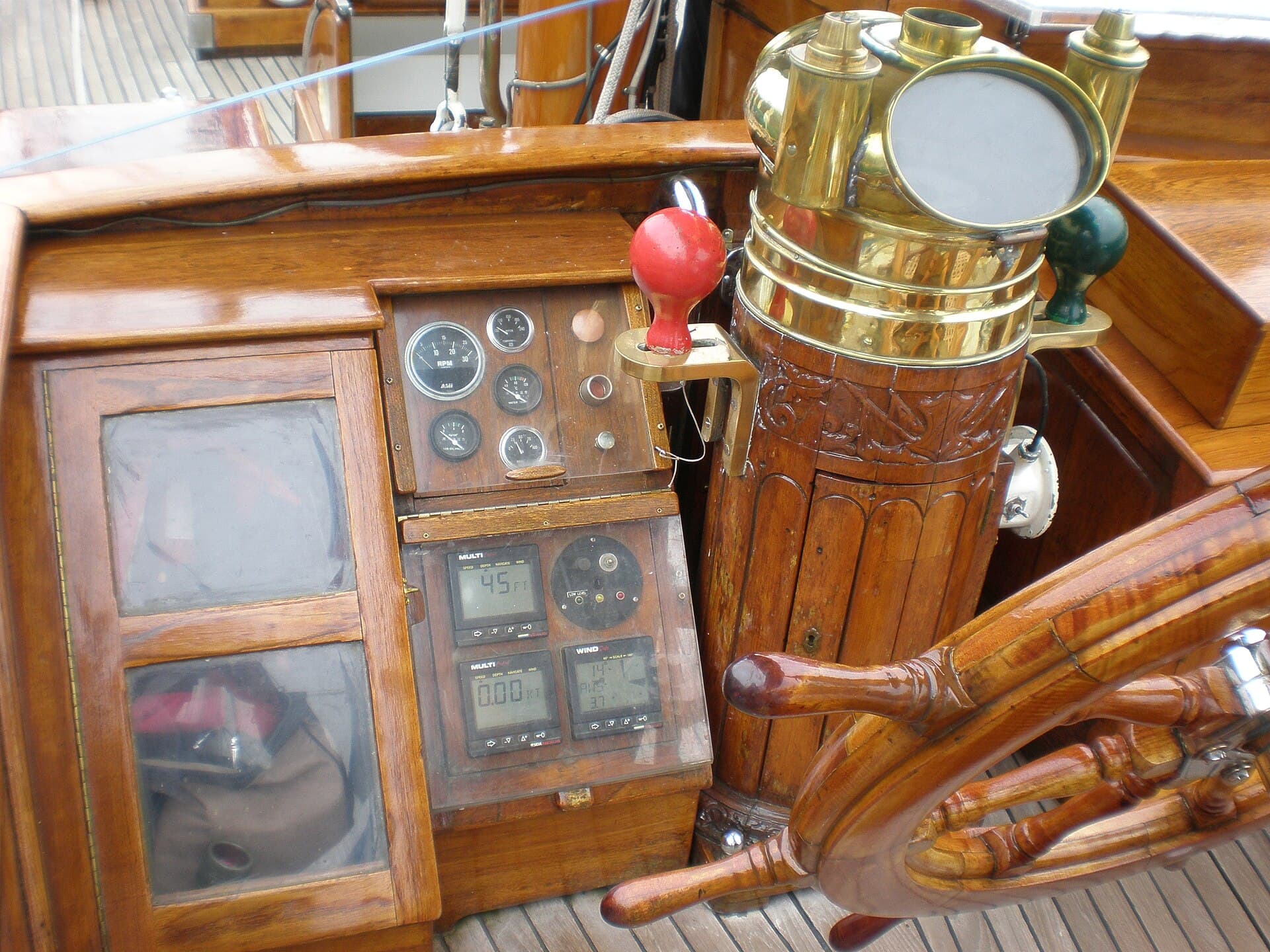
Photo: HMCS Oriole steering wheel, readouts and compass by BrokenSphere. Licensed under CC BY-SA 3.0. Source on Wikimedia Commons. Also listed on the AM Wholesale image credits page.
A 30- to 50-foot Australian cruiser is the boat the old AM Wholesale desk saw most often: big enough for a real network, small enough that a messy refit still hurts. The temptation is to start with a 16-inch brochure. Start with the things that do not photograph.
1. Power
Two house batteries that already sag under an inverter will not enjoy a radar, an MFD and a CHIRP pinging together. Do the load list: displays, radar, sounder, AIS, autopilot clutch, radios, courtesy lights. Then read Victron marine power systems and lithium versus AGM. If the boat is still on a single cranking battery, stop and fix that first.
2. Network
Lay or replace the NMEA 2000 backbone as a backbone. Budget a heading sensor. Budget a gateway if a working 0183 autopilot stays. The NMEA 2000 refit guide is the companion piece. Without this step, the “package” is a pile of boxes.
3. Position and heading
A GNSS on the cabin top, clear of radar and satdomes, and a heading sensor away from speakers. These two sensors decide whether AIS, radar overlay and autopilot are honest. Cheap here, expensive later.
4. Glass
Now choose the MFD family using the brand comparison. On this size of boat, 12 inches is the lower-helm comfort line; 9 inches is a cockpit or flybridge repeater. A single 16-inch unit with no repeater upstairs is how skippers drive looking at their knees.
5. Sonar, radar, AIS, radio
Add sensors in the order you actually use the boat:
- East-coast cruiser that fishes: CHIRP plus a decent transducer. See CHIRP and Airmar.
- Night or shipping: radar, then AIS. See dome versus open array and AIS Class A versus B.
- Always: a fixed DSC VHF that shares GPS. See VHF licences and DSC.
6. The unglamorous rest
Autopilot ram and computer sized for the hull, not the display. Engine-room camera if you have a generator. A stereo on NMEA only if the backbone already behaves. Lighting and underwater kits from the marine lighting hub after the navigation lights are legal.
Write the package as a single job for one installer. Split tenders — “my mate will do the power, the yard will do the glass” — are how Australian refits grow a second invoice. If you are the dealer quoting it, the wholesale buying guide is for you.
Frequently asked questions
- How many displays does a 40-foot flybridge need?
- One large MFD at the lower helm and a matching or smaller repeater upstairs is the usual Australian pattern. A third display is a sonar or engine-room camera choice, not a default. Two well-networked screens beat three orphaned ones.
- Should the watermaker and the electronics go in the same refit?
- Only if the power study is done first. A desalinator high-pressure pump will teach you whether the house bank was sized for glass. Read the watermaker hub before you add another 12-volt story.
- Is radar mandatory on a 35-foot cruiser?
- No Australian recreational rule says you must carry radar. Night work, shipping and the Wide Bay or Port Phillip approaches make it a practical yes. If you skip it, be honest about when you will not leave the berth.