Marine lighting · 13 min read · Updated 2026-09-16
COLREGs navigation lights explained for Australian boats
Atmosphere lighting is optional. The lights that say what you are, which way you point, and whether you are fishing are not. This is the Australian reading of those rules.
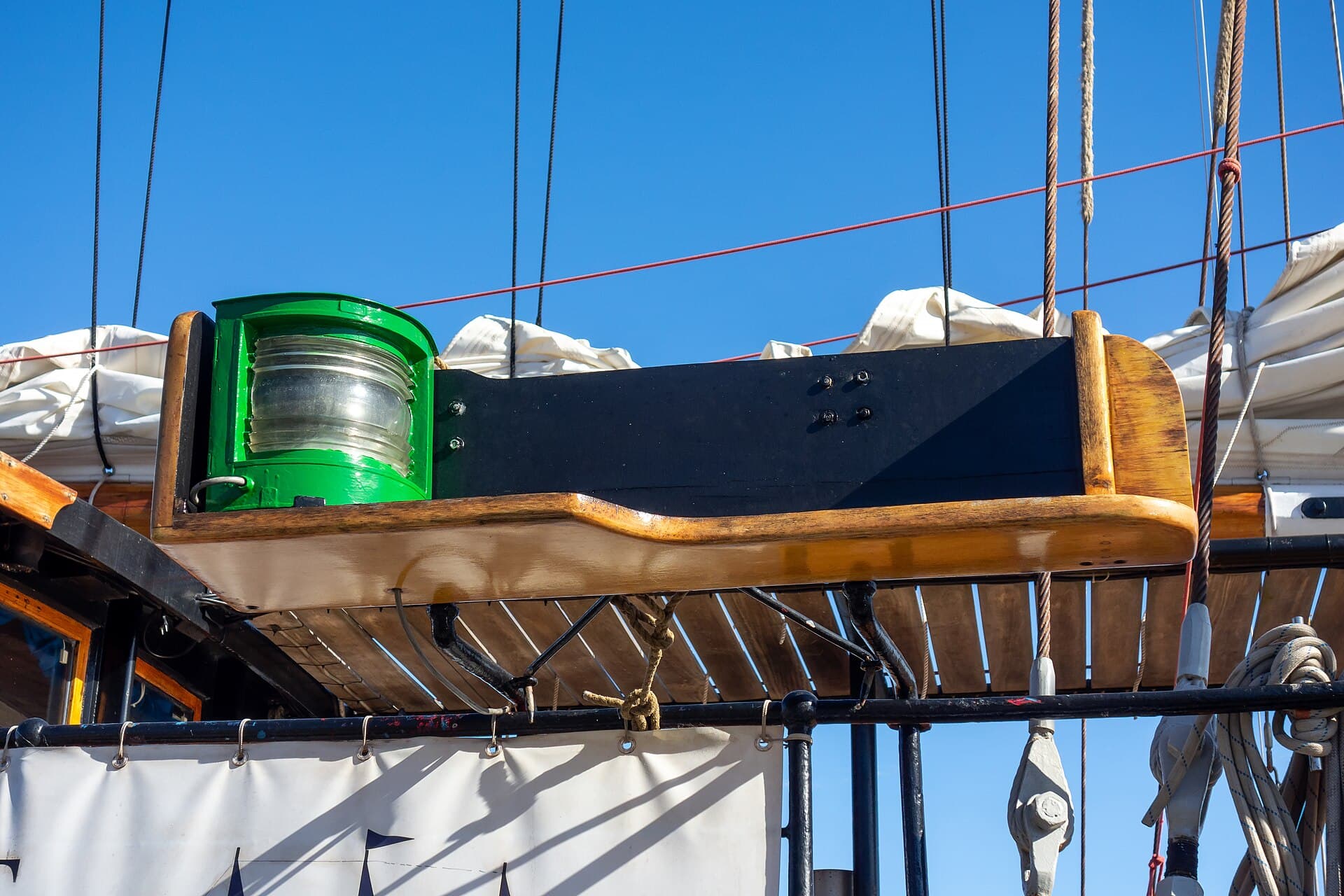
Photo: Green navigation light on schooner Älva by W.carter. Licensed under CC BY-SA 4.0. Source on Wikimedia Commons. Also listed on the AM Wholesale image credits page.
The Collision Regulations (COLREGs), as applied through Australian law and state marine safety rules, care about a small set of lights: sidelights, stern light, masthead or steaming light, all-round white, and the special lights for towing, sailing, fishing and not-under-command. Everything else on a Gold Coast transom is jewellery.
The photo on this page is a green starboard light doing its one job: an arc of green that says “this is my right side”. That is the product.
The lights that name the boat
- Sidelights: red port, green starboard, each showing over the correct forward arc.
- Stern light: white, showing aft.
- Masthead / steaming: white, showing forward, used when you are power-driven. A sailing boat under engine is power-driven.
- All-round white: the trailer-boat and anchorage workhorse, and a legal option on many small vessels.
Length and operation change the combination. A 12-metre flybridge under power is not lit like a 4.8-metre tinny. Read your state handbook (MSQ, Transport for NSW, Vic, and the others) for the table that matches your hull, then buy fixtures that are sold as navigation lights.
What people get wrong
They dim nav lights to be “tasteful”. They replace a failed stern light with a cockpit flood. They leave underwater blues on in a channel and wonder why a ferry skipper is angry. They mount a combination light where a rocket launcher shadows the arc. They power nav lights from the same fuse as a stereo that will blow.
Nav lights get their own fused circuit, a switch that is not the courtesy switch, and a daily glance before a night departure. See GPS plotter installation mistakes for the same discipline on glass: the pretty thing is not the legal thing.
LEDs are fine. Uncertified LEDs are not.
Marine LED navigation lights exist, draw little, and survive if the gland and the driver are real. Automotive bulbs, RGB strips and “marine style” deck lights are not a substitute. If the listing does not talk about arcs and approvals, it is a courtesy light.
Anchor, sailing, fishing
An all-round white at anchor is how other people find you in the Broadwater at 01:00. Sailing vessels have their own optional configurations; most Australian weekend sailors under 20 metres still show sidelights and stern, or a tricolour at the masthead if the boat is actually sailing and the skipper understands when to switch it off. Fishing and commercial lights are a ticketed conversation — do not improvise them for a social trawl.
For the decorative rest, use underwater lights and trailer-boat LED lighting. For seeing the deck while you work a fish, use spreader and flood lights. None of those replace this page.
Frequently asked questions
- Does a 5-metre tinny need sidelights?
- A vessel under 7 metres on an inland or smooth-water run can often show an all-round white and, if practicable, sidelights — but state rules and the way you operate matter. If you cross a bar at night or share a channel with bigger boats, fit a proper combination. When in doubt, light yourself like a grown-up.
- Can I replace nav lights with RGB strips?
- No. Navigation lights have colour, arc and intensity requirements. An RGB courtesy strip is not a sidelight, even if you set it to red.
- Do LEDs meet COLREGs?
- Yes, if the fixture is certified as a navigation light, not merely “very bright and red”. Buy marine nav lights with a stated approval, and keep a spare because LEDs still fail at the gland and the driver.